Brand
This page is the source of truth for how nitid presents itself: the logo, the colours, the typography, and what the project says about itself in public. It exists so the README and the documentation site stay in step instead of drifting apart.
Name
nitid, from Latin nitidus: clear, transparent, precise. Always lowercase
in prose and in the wordmark, including at the start of a sentence. NITID in
capitals refers only to the Python class.
Logo
| Asset | Use |
|---|---|
assets/brand/nitid-logo-on-light.png |
Full logo on light backgrounds — navy wordmark |
assets/brand/nitid-logo-on-dark.png |
Full logo on dark backgrounds — light wordmark |
assets/brand/nitid-mark.svg |
The mark alone: favicons, avatars, and anywhere too small for the wordmark |
assets/brand/nitid-background.png |
Abstract background for hero areas |



The mark is three nodes — lime, blue, violet — joined into a detection graph. Keep clear space around the logo of at least the diameter of the lime dot, do not recolour the nodes, and do not set the navy wordmark on a dark background: use the light variant instead.
Demo images
| Asset | Source |
|---|---|
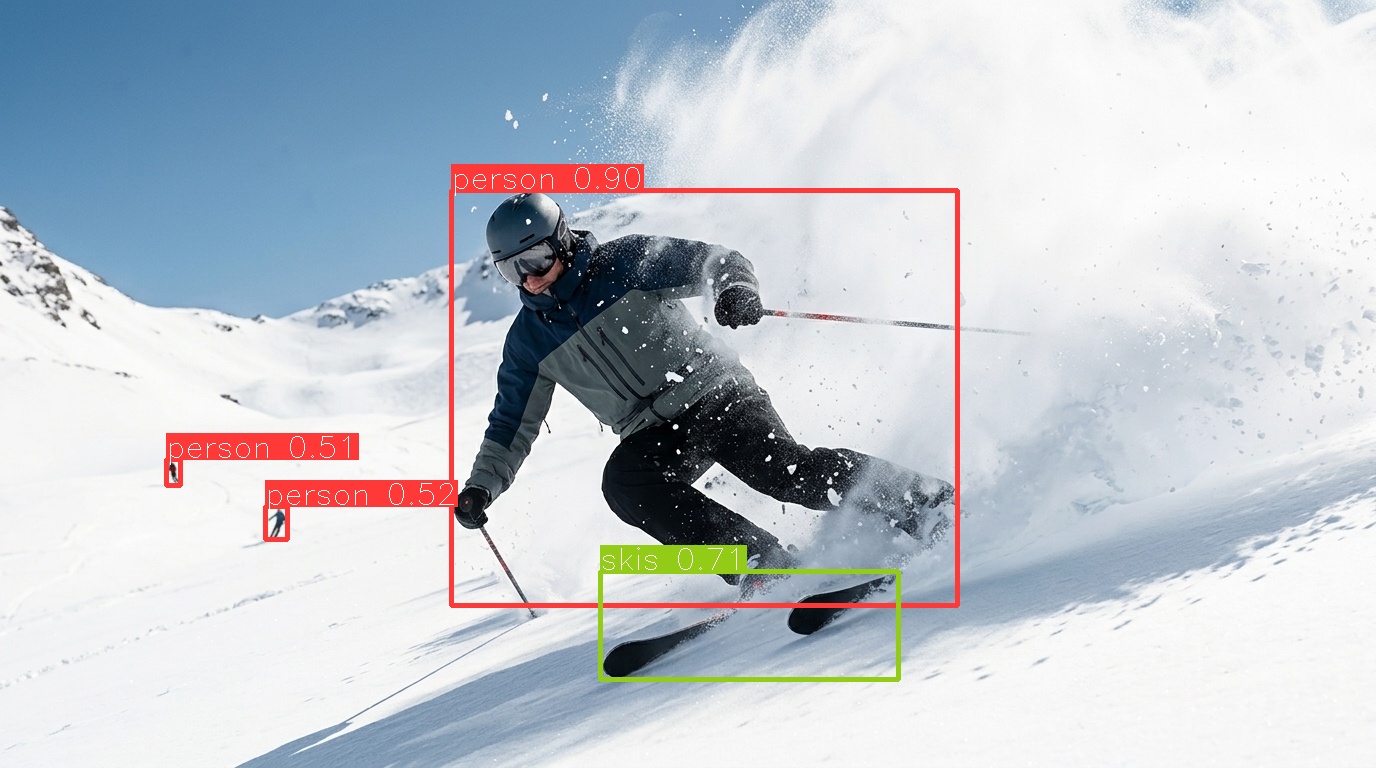
assets/demo/source/ski.jpg |
AI-generated image (Google Gemini); no photographic source or third-party rights |
assets/demo/detect-ski.jpg |
source/ski.jpg with nitid predict model=model1m task=detect source=docs/assets/demo/source/ski.jpg conf=0.5 save=true |
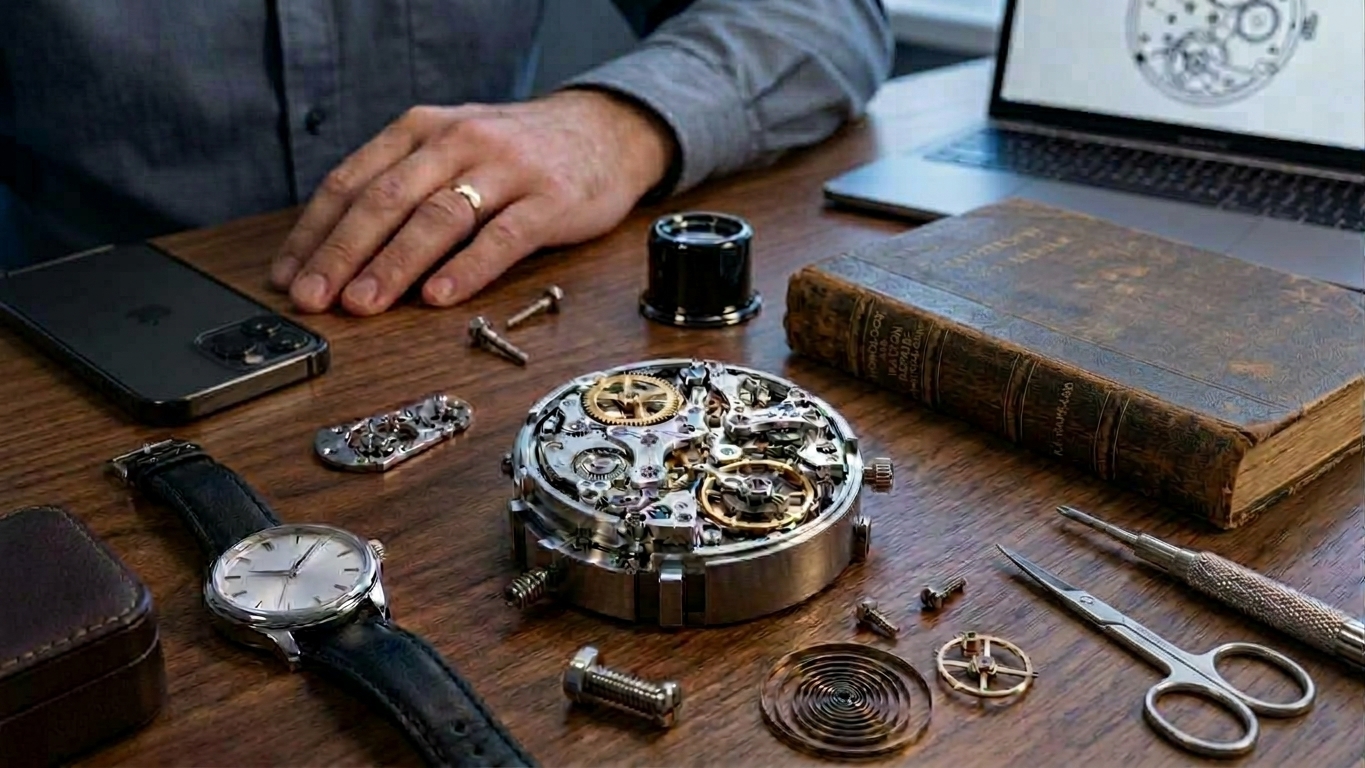
assets/demo/source/watchmaker.jpg |
AI-generated image (Google Gemini); no photographic source or third-party rights |
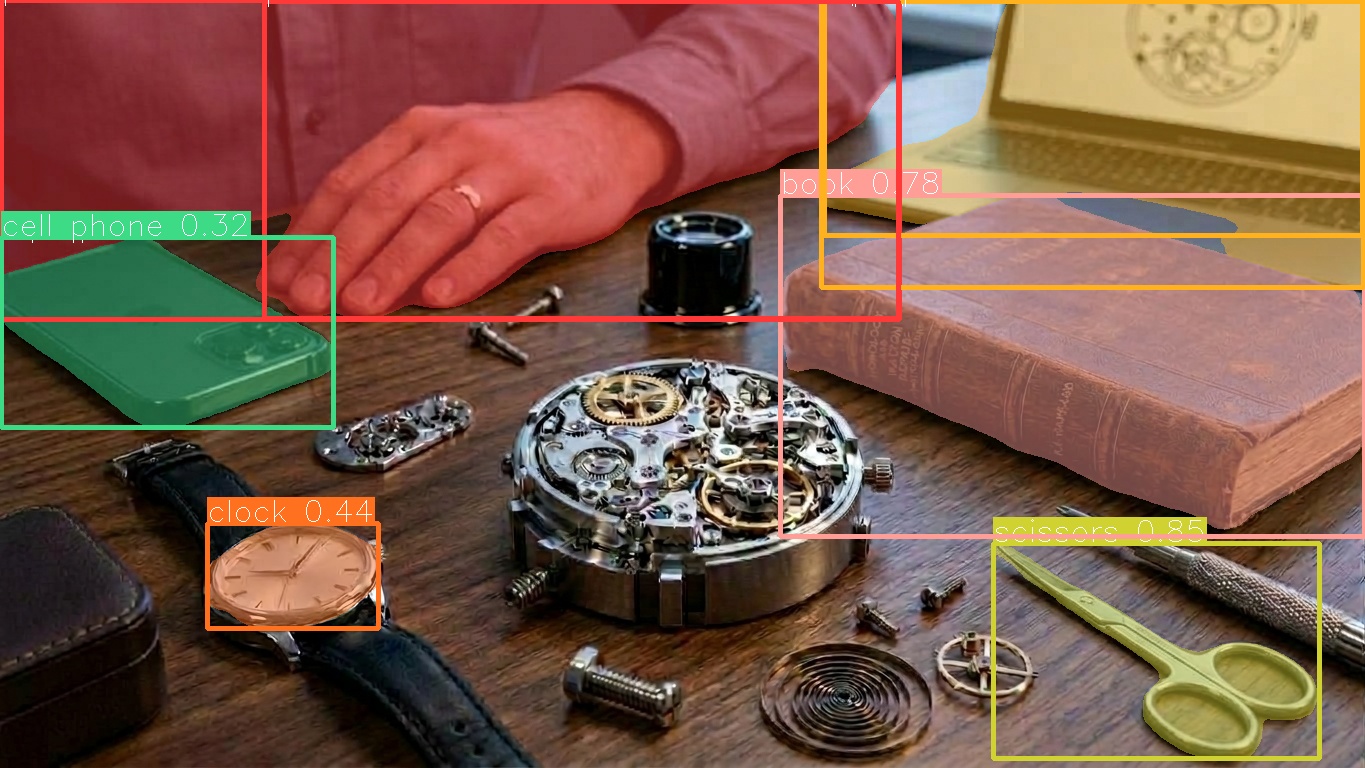
assets/demo/segment-watchmaker.jpg |
source/watchmaker.jpg with nitid predict model=model1l task=segment source=docs/assets/demo/source/watchmaker.jpg conf=0.3 save=true |
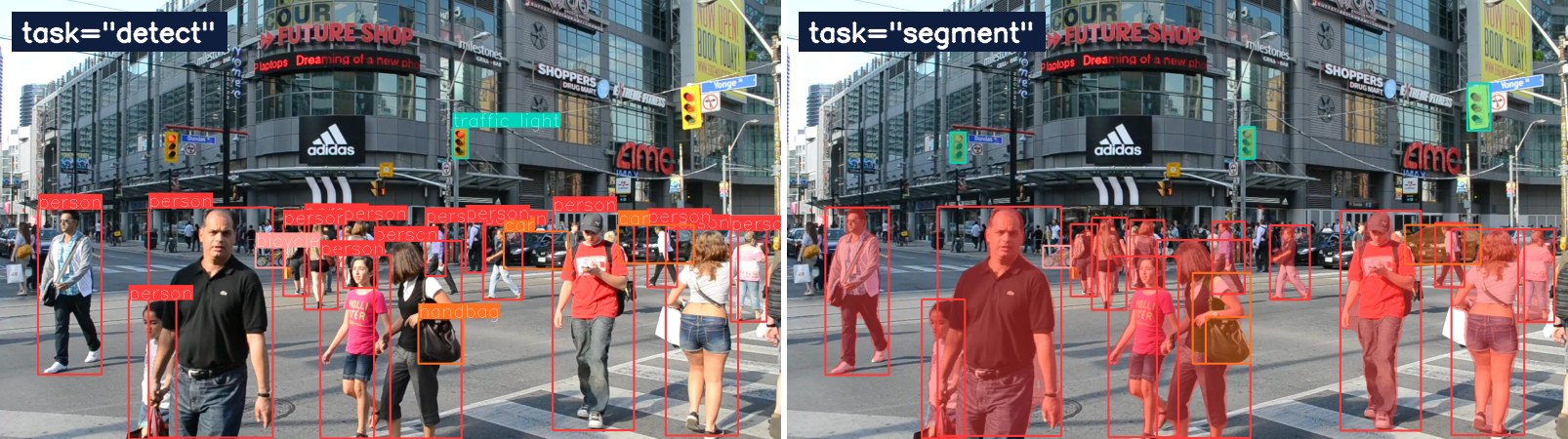
assets/demo/street.jpg |
Frame at 00:38 of DiagonalCrosswalkYongeDundas.webm by Raysonho (Wikimedia Commons, CC0). Left: task="detect"; right: task="segment", both model1s, conf=0.5 |
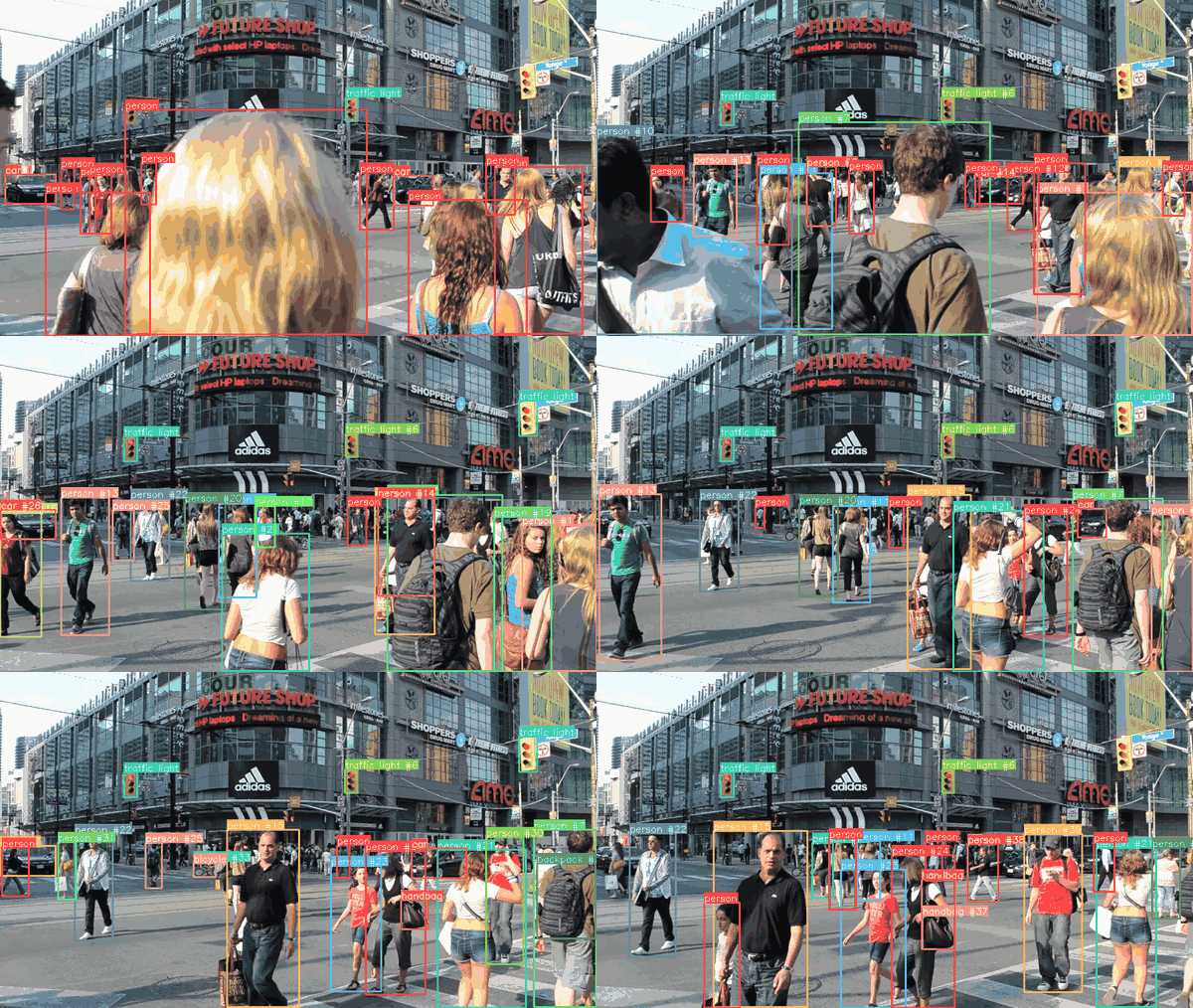
assets/demo/track.gif |
00:33–00:38 of the same CC0 video. model1s detection with track() (ByteTrack), vid_stride=2, 600 px wide at 8 fps |

Every image the documentation shows must have a recorded source here, and its
licence must allow redistribution. Unannotated originals live in
assets/demo/source/; the rendered results sit next to them in assets/demo/.
Colour
The dark palette is the product palette: it is what nitid looks like on the website and in the documentation.
| Role | Hex |
|---|---|
| Background | #060b1a |
| Surface | #0d1530 |
| Surface, sunken | #080e21 |
| Text | #e8ecf7 |
| Text, muted | #b9c4dd |
| Text, dimmed | #8794b8 |
| Text, faint | #6b7ba3 |
| Border | #ccd5e8 at low alpha |
| Link | #7fb0ff |
| Accent (lime) | #cfe85b |
| Primary action (blue) | #1266f2, hover #0b52cc |
| Violet | #7c22f0, hover #6a17d6, light #a78bfa |
The logo carries its own fixed values, which are deliberately more saturated
than the interface palette: navy #05254b, violet #6227fb, blue #045efd,
lime #cfe85b.
Vaelsys, the company behind nitid, has a separate warm design system —
background #f3f2f2, ink #201f1d, copper accent #b87a3d. Those tokens
belong to corporate surfaces. Do not mix them into nitid's own interfaces.
Typography
| Role | Family | Weight |
|---|---|---|
| Headings | Archivo | 800 |
| Body | Inter | 400 / 500 |
| Code | JetBrains Mono | 400 |
Each has a system fallback stack, so nothing breaks when the webfonts are unavailable.
Voice
nitid's pitch is not "a familiar API". It is that the code is genuinely usable in a commercial product. The public messaging announces the Apache 2.0 licence of the code and of the official pretrained weights, which their authors publish under Apache 2.0 (D-FINE and D-FINE-seg, decided in #17). The pretraining datasets keep their own terms, and the messaging says so.
- Headline: One library. DETR made simple.
- Supporting line: Train, validate, export and run vision models. The code and the official pretrained weights are under Apache 2.0, so you can ship them in your product without opening your code or paying a license.
- Short form: No AGPL, no surprises.
The four things that make nitid different, in this order:
- Edge first. The models are designed to run on the hardware next to your cameras, not only on a datacenter GPU.
- Self-contained checkpoints. Every checkpoint carries what it needs to be reproduced and checked.
- Handles messy datasets. COCO and YOLO formats are read directly, with no conversion step.
- Export anywhere. OpenVINO, ONNX, TorchScript and TensorRT, from the same checkpoint.
Write plainly: short sentences, no superlatives, no comparisons to competitors as a selling point. A technical comparison is fine where it informs a decision; it is not the pitch.
What we announce
These are deliberate scope decisions, not oversights.
Three tasks, five operations. nitid supports exactly three tasks — object
detection, instance segmentation and semantic segmentation — and the public
messaging announces exactly those. The library, its documentation and the pitch
describe the same scope, which keeps the promise narrow and the "three tasks,
five operations" framing honest. The five operations are predict, track,
train, val and export.
Semantic segmentation is fine-tune only. Detection and instance
segmentation ship pretrained COCO checkpoints; semantic segmentation does not.
task="semantic" starts from the instance-segmentation checkpoint and is
trained on the user's own masks. Say so wherever the three tasks are announced,
and never show semantic predictions from the untrained starting point (decided
2026-10-02).
The README is the pitch, not the manual. It covers the three announced
tasks and the five operations; details belong on the documentation site. Pose
estimation, oriented bounding boxes and GStreamer video I/O were removed from
the library on 2026-09-25 and are preserved in the archive/pose-obb-gstreamer
tag.
The repository is the source of truth for the API. Where marketing material and the code disagree about names or signatures, the code wins and the marketing material gets corrected.
Products built on top of nitid are announced elsewhere. Operating systems, certified hardware and licensing live on the Vaelsys website. This repository documents the library and nothing else.