nitid
One library. DETR made simple.
Train, validate, export and run vision models. The code and the official pretrained weights are released under the Apache License 2.0, patent grant included, so you can ship them inside your own product without opening your code or paying for a license.
nitid, from Latin nitidus: clear, transparent, precise. No AGPL, no surprises.
Why nitid?
- Edge first. The models are designed to run at the edge, on the hardware next to your cameras, not only on a datacenter GPU.
- Self-contained checkpoints. Every checkpoint carries the config and the class names it needs to be reproduced and checked.
- Handles messy datasets. COCO and YOLO layouts are read directly, with no conversion step.
- Export anywhere. OpenVINO, ONNX, TorchScript and TensorRT, from the same checkpoint.
One library, three tasks, five operations
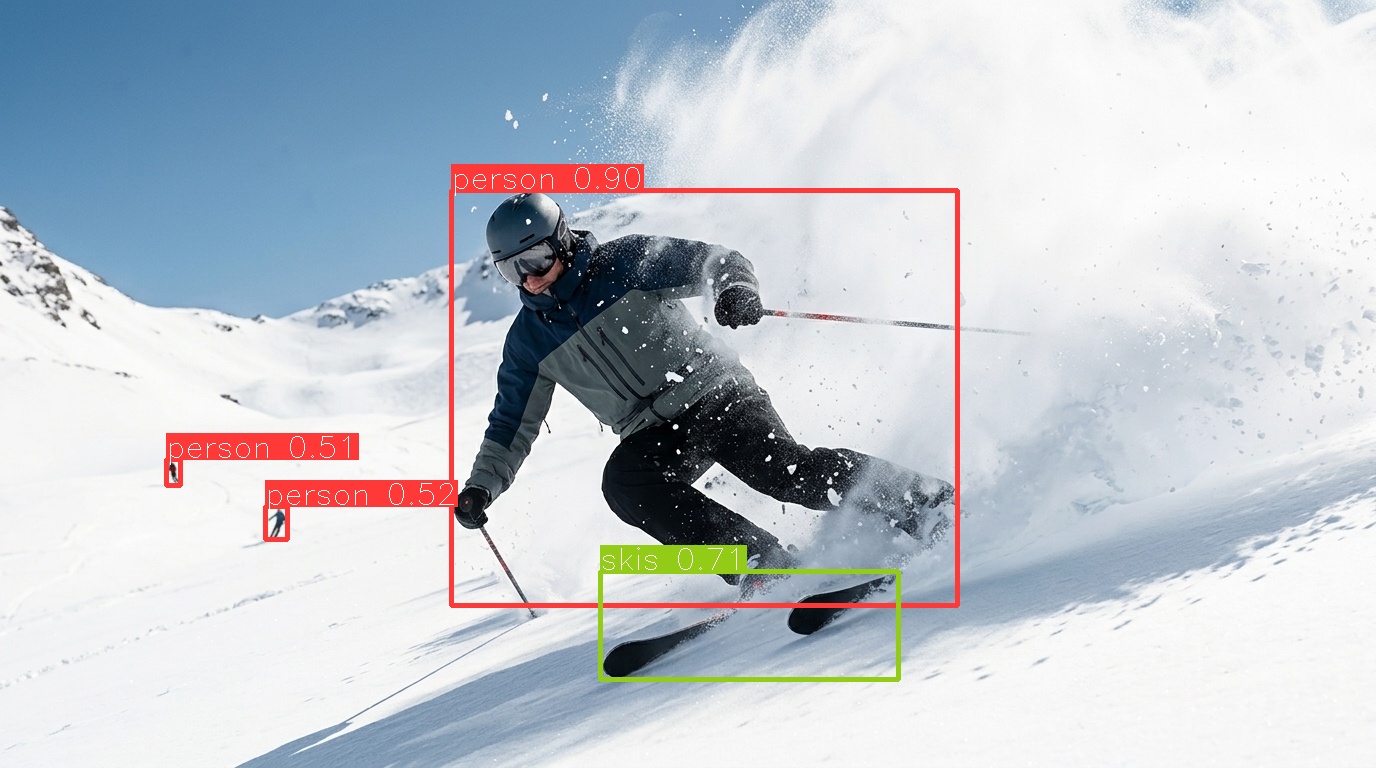
Object detection, instance segmentation and semantic segmentation, through one
API: predict, track, train, val and export.
- Python API and command line
- Automatic download of the official COCO checkpoints for detection and instance segmentation; semantic segmentation is fine-tuned on your own masks
- Fine-tuning and validation for boxes, masks and dense semantic maps
- Tracking with video, webcam and RTSP input
Getting Started
If you're new to nitid, follow these guides in order:
Documentation
- Quick Start
- Fine-tuning
- Export
- Deployment
- Training on CUDA and OpenVINO machines
- API Reference
- Troubleshooting
Project Direction
- Roadmap — what is in scope, what is not, and how the phases are sequenced
- Brand — logo, palette, typography, and what the project announces
- Decision records — why the project is built the way it is
For Contributors
If you're planning to contribute to nitid, start with the Onboarding Guide.